


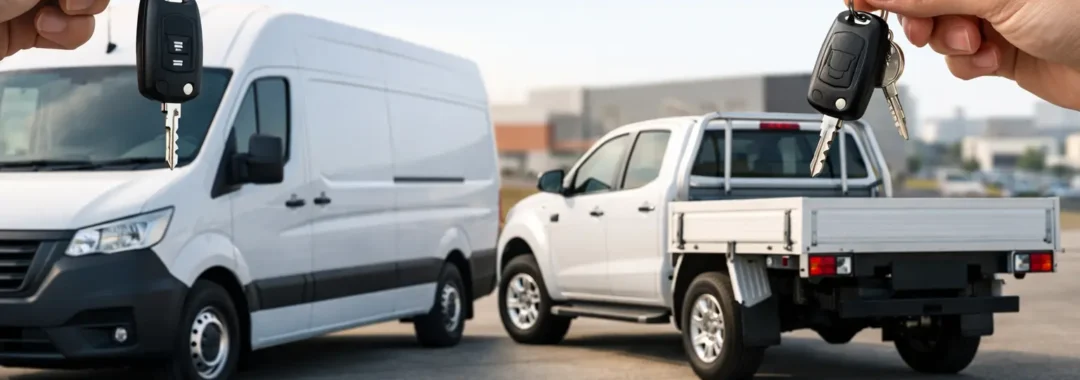
You usually realise the difference between van hire or ute rental when the job is already booked, the boxes are packed, and you are staring at a couch that clearly will not fit the way you hoped. That is the point where the cheaper option can turn into the more expensive mistake. Choosing the right vehicle upfront saves time, fuel, extra trips and a fair bit of stress.
If you are moving a few bulky items, doing a tip run, picking up stock, or helping someone shift flats, the right choice depends less on price alone and more on what you are carrying, how far you are going, and how confident you are driving in Sydney traffic. A van and a ute can both get the job done, but they do it differently.
Van hire or ute rental: what is the real difference?
A ute gives you an open tray, easier loading for awkward items and a vehicle shape that feels familiar to many drivers. It is often the better fit for messy loads, building materials, garden supplies or anything that does not need to be fully enclosed. If you are collecting timber, rubbish for the tip, tools, or equipment that can handle the weather, a ute is practical and straightforward.
A van is the better choice when you need protected space and more volume. Furniture, boxes, appliances, event gear and business stock usually travel better in a van because they are sheltered from wind, rain and road grime. Vans also make sense when you want to load more in one trip instead of stacking a ute tray high and hoping the tie-downs hold.
That is the basic split, but the useful answer is in the details.
When a ute rental makes more sense
A ute is often the right call when access matters as much as carrying capacity. If you need to pull into tighter car parks, reverse into narrow driveways or make a few quick collection stops, a ute can feel easier to manage than a moving van. For many renters, it drives more like a regular vehicle, which helps if you do not hire commercial vehicles often.
Utes are also ideal for loads that are dirty, oversized or awkwardly shaped. Think landscaping materials, renovation supplies, machinery, whitegoods that can be strapped down, or marketplace purchases that are too big for a hatchback but do not require a fully enclosed cargo area. If the load is heavy but not especially tall, a ute can be the more efficient option.
There is a trade-off, though. Weather matters. So does security. If you are transporting anything valuable, soft-furnished, boxed, or easy to damage, an open tray can create problems. You may also spend more time securing the load properly, especially on longer trips or motorway runs.
When van hire is the better option
Van hire works best when the priority is space, protection and fewer trips. If you are moving out of a unit, delivering stock, transporting market gear, or collecting flat-pack furniture and household items in one go, a van usually gives you a much cleaner solution.
The biggest advantage is enclosed cargo space. You are not worrying about a sudden change in weather, loose items shifting in the wind, or whether that mattress is going to stay covered on the drive home. A van can also make loading easier for boxes and stacked items because you are working with a contained space rather than trying to strap everything down on an open tray.
For local moves around places like Alexandria, Mascot or the inner suburbs, a van can save a surprising amount of time simply by reducing repeat runs. That matters when you are paying for the hire period, coordinating helpers, or trying to get keys returned before close of business.
The trade-off is that a van can feel larger on the road, especially if you are not used to driving one. Low car parks, tight corners and visibility take more attention. It is not difficult, but it is different enough that some drivers prefer the familiarity of a ute if the load allows it.
Think about the load first, not the daily rate
It is tempting to compare van hire or ute rental purely on the advertised day rate. Fair enough – most people hiring a vehicle for a practical job are watching the budget. But the cheapest listed option is not always the cheapest overall.
If a ute means two or three trips where a van could do one, the maths changes quickly. Fuel costs go up, your time disappears, and the hire period may stretch longer than planned. On the other hand, if you only need to move a few lengths of timber, a barbecue, or a washing machine, paying for a larger van may be unnecessary.
This is where honest advice matters. A good rental company should help you match the vehicle to the job instead of upselling you into more space than you need. That is especially important for customers trying to keep the bond low, avoid surprise charges, and book something simple without the usual rental counter runaround.
Access, parking and Sydney streets
Sydney driving changes the decision more than people expect. A vehicle that looks ideal on paper may be annoying in real conditions if you are dealing with unit blocks, narrow laneways, busy suburban streets or limited parking.
A ute is usually easier if your day includes quick stops and suburban access. If you are collecting items from multiple sellers, visiting a hardware store, then heading to the tip, the flexibility can be worth a lot. Loading from the side or rear can also be simpler for certain items.
A van suits jobs where you can load once, drive once, unload once. If your pick-up and drop-off points are relatively straightforward and your goal is to move volume efficiently, it is often the smarter vehicle. For airport-adjacent areas and dense inner-city suburbs, though, you will want to be realistic about height clearance and parking space.
Weather and security are not small details
This is one of the biggest deciding factors, and it gets overlooked. Sydney weather does not need to be dramatic to ruin a load. A bit of rain can soak boxes, damage soft furnishings and turn cardboard into pulp. Wind can shift coverings. Dust and road grime can affect stock, equipment and household goods.
If the load needs to stay clean, dry or out of sight, a van is the safer choice. If the load is hard-wearing, easily strapped down and not likely to attract attention, a ute can be perfectly suitable.
Security matters even more if you are making stops along the way. With a van, your items are enclosed. With a ute, every stop requires a bit more thought.
Driving confidence matters too
Some people are completely comfortable jumping into a van. Others would rather avoid it unless they really need the space. There is no point pretending this does not affect the decision.
If you are nervous about a larger vehicle, a ute may give you a more relaxed day if the load fits safely. If you are comfortable driving something bigger, a van often rewards that confidence by making the whole job faster and neater.
The best choice is the one that suits both the task and the driver. Rushing to book the biggest or cheapest option without thinking about either usually causes the headaches later.
Who should choose van hire or ute rental?
If you are a local resident doing a small move, collecting furniture, or helping family shift, van hire is often the better all-rounder for household goods. If you are a tradie, landscaper, renovator or weekend warrior dealing with building supplies, green waste or bulky equipment, a ute rental may be the more practical fit.
Business users should also think about presentation and protection. Delivering stock, event equipment or boxed items in a van can be more secure and professional. For rougher loads or site-based work, a ute often wins on convenience.
For many renters, the answer comes down to one simple question: do you need open access or enclosed space?
Booking the right vehicle without overcomplicating it
The easiest way to get this right is to be clear about three things before you book: what you are carrying, how many trips you can realistically do, and where you will be driving and parking. Once you know that, the choice becomes much simpler.
If your load is weather-sensitive, valuable, boxy, or larger in volume than weight, lean toward a van. If it is rugged, awkward, low in height, or likely to involve messy materials and quick access, lean toward a ute.
A budget-focused rental provider with flexible pick-up and drop-off options can make the whole process easier, especially if you are trying to fit the hire around work hours or an airport arrival. Low Cost Car Rental works well for that kind of practical booking because the focus stays on affordability, straightforward terms and getting people into the right vehicle without the usual fuss.
If you are still unsure, think less about the badge on the vehicle and more about the day you want to have. The right hire is the one that gets the job done in one go, without turning a simple task into an all-day mission.

