


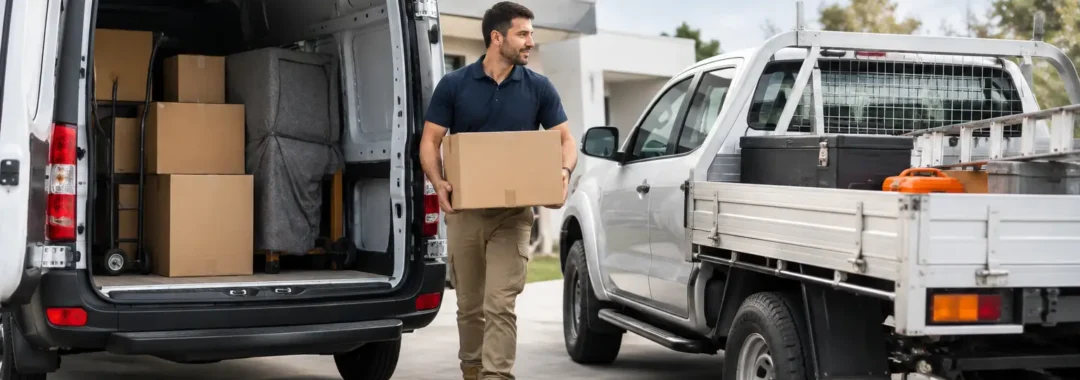
A cheap daily rate is only useful if the vehicle can actually handle the job. When weighing up van versus ute hire, the best choice usually comes down to what you are carrying, whether it needs weather protection and how easy it is to load. A ute is ideal for awkward, dirty or oversized gear. A van makes more sense when you need enclosed space for boxes, stock or furniture.
Hiring the right vehicle can save you a second trip, reduce the risk of damage and keep your day moving. Here is how to make a practical call before you book.
Van versus ute hire: the key difference
A van has an enclosed cargo area behind the front seats. It is built for carrying items securely and out of the weather, with space that is generally easier to pack from floor to roof. For a house move, flat-pack furniture collection, business delivery run or transporting cartons, that protection is a major advantage.
A ute has an open tray, giving you flexible access from the rear and sides. It is often the better tool for loads that are too tall, muddy, wet or awkward for an enclosed cargo area. Think green waste, landscaping supplies, building materials, ladders, tools or a motorbike. The open tray also means you are not trying to manoeuvre a long item through a van door.
Neither option is automatically better. The right hire vehicle is the one that suits the load, the route and the amount of time you have.
Choose a van when protection and packing matter
A van is usually the safer choice if rain, wind, dust or security could affect what you are carrying. Sydney weather can turn quickly, and cardboard boxes, electronics, mattresses and retail stock do not belong exposed in an open tray.
For moving jobs, a van lets you stack boxes neatly, use tie-down points where available and keep smaller belongings together. It can also be easier to lock the vehicle if you need to stop for fuel, collect keys or take a break between loads. That matters for tradies carrying valuable tools and small businesses completing multiple deliveries.
A van can be the more efficient option for a one-bedroom move, office supplies, market equipment or bulky purchases from a warehouse. The load is contained, so there is less chance of something shifting out of place or blowing away on a motorway.
The trade-off is access. Large, unusually long or very heavy items can be harder to position inside an enclosed cargo area. Check the vehicle’s internal dimensions, payload and door opening before assuming everything will fit. A sofa may fit by volume but still be difficult to load if it will not clear the door or turn inside.
Van hire suits jobs such as
Van hire is a strong fit for moving boxes between apartments, transporting furniture, collecting whitegoods, delivering stock, carrying event equipment and taking tools to a job where they need to stay dry and secure. It is also a sensible option when you are unfamiliar with the area and want a vehicle that feels closer to driving a larger car than managing an open load.
Choose a ute for oversized, dirty or outdoor loads
A ute earns its keep when the cargo is hard to enclose. Garden waste, bags of soil, timber, pavers, ladders and equipment with mud or grease are usually better in a tray than inside a van. Loading is more direct, and cleaning up afterwards is generally simpler.
The tray can also be useful for items that extend above the height of a van’s cargo space. If you are transporting long timber lengths or equipment that needs clear access from the side, a ute may save a lot of lifting and rearranging.
For renovation and landscaping work, a ute is often the practical choice because it separates the mess from the cabin. You can load rubbish, offcuts or damp gear without worrying about dirtying an enclosed cargo floor.
But an open tray needs proper planning. Your load must be legally and securely restrained, and you need to account for weather. Tarps, ropes and rated tie-downs may be necessary, especially if you are travelling at higher speeds or using major roads. Never rely on the weight of an item alone to keep it in place.
Ute hire suits jobs such as
A ute works well for tip runs, garden projects, moving timber or building supplies, collecting large outdoor furniture, carrying ladders and transporting work gear that is too messy or tall for a van. It is particularly handy for jobs around the Sutherland Shire where you may be shifting materials between home, site and supplier in one day.
Think about the load, not just the vehicle size
The most common mistake is choosing based on how big a vehicle looks from the outside. Capacity is about more than the cargo area. You need to consider payload, length, width, height and where the weight sits once it is loaded.
Start by measuring your largest item. Then estimate the total load, including boxes, tools, accessories and packing materials. A vehicle can have plenty of room but still have a payload limit that rules out a particularly heavy load of tiles, soil or building materials.
Weight distribution matters as well. Put heavier items low and as close to the centre of the vehicle as practical, then secure them so they cannot slide. Avoid piling everything at the rear of a ute tray or van cargo area. An unstable load affects braking, steering and visibility.
If you are moving furniture, allow for blankets, straps and a trolley. If you are picking up materials, ask the supplier for the dimensions and weight before you arrive. A quick call can prevent an expensive extra trip.
Consider your route and parking arrangements
A van may offer more protection, but a ute can be easier to load at a building site or supplier yard. On the other hand, a van can be more convenient when parking in a public area while making deliveries, since the load is locked away.
Before booking, think about access at both ends. Is there a steep driveway, low clearance, narrow lane or basement car park? Do you need to reverse near a loading dock? Will someone be available to help lift a heavier item?
For inner-Sydney moves, parking time can be as valuable as cargo space. A single well-packed van load may be far less stressful than making several trips in a smaller vehicle. For an outdoor project with easy driveway access, a ute can make loading and unloading much quicker.
Cost is more than the advertised daily rate
Budget matters, especially when a move or work job already has plenty of costs attached. Compare the total hire cost, including the hire period, bond requirements, insurance options, kilometres, fuel and any equipment you may need. The cheapest-looking option can become poor value if it forces you to make extra runs or hire another vehicle later.
Also be realistic about timing. A quick furniture collection can turn into a full day if the seller is delayed, traffic builds up or you need a second pair of hands. Booking a vehicle that suits the whole job is often better value than rushing to return an unsuitable one.
Low Cost Car Rental offers practical van and ute hire options for customers who want straightforward pricing and flexible collection arrangements. If you are unsure which vehicle will fit your job, ask before booking. A few details about your load can make the choice much clearer.
A quick way to decide
Choose a van if your load needs to stay dry, secure and neatly packed. Choose a ute if it is oversized, dirty, tall or easier to load from an open tray. If your job involves both – for example, furniture plus garden waste – consider which part of the load is hardest to manage, or split the work into separate trips.
The best hire choice is not the biggest vehicle or the lowest headline rate. It is the one that carries your load safely, gets through your route comfortably and helps you finish the job without unnecessary running around.

