
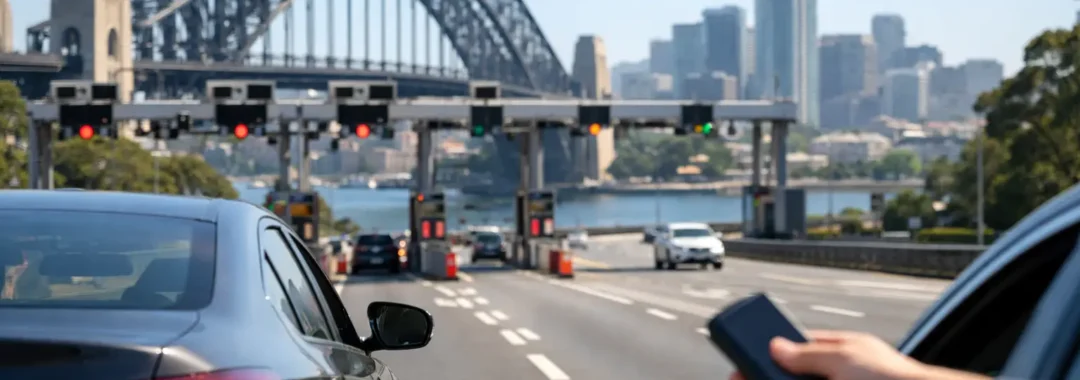
Land at Sydney Airport, pick up your car, merge onto the M8 or M5, and it can happen fast – you are on a toll road before you have had time to think about it. If you are wondering how to pay tolls in Sydney, the good news is that it is not hard once you know which system applies to your trip, your car, and how long you are driving for.
Sydney uses cashless tolling. That means there are no toll booths where you stop and hand over coins or tap your card. Instead, tolls are charged electronically using a tag in the vehicle or by matching your number plate to an account or temporary pass. For locals, that is fairly routine. For visitors, occasional drivers, and rental car customers, it can be confusing at first, especially if you are trying to keep costs down and avoid surprise admin fees.
How to pay tolls in Sydney if you are driving your own car
If you are in your own vehicle, you usually have two main options. You can use an electronic toll account with a tag, or you can buy a temporary pass linked to your number plate.
A toll account suits drivers who use Sydney toll roads regularly. The tag sits inside the windscreen and records your trips automatically. Charges are then deducted from your nominated payment method. This is the easiest setup if you are commuting or using toll roads often, because you do not need to remember individual trips.
A temporary pass is better for short stays, road trips, or one-off use. You buy it for a set period and it covers toll travel for that time, as long as the vehicle details are entered correctly. This works well for interstate visitors or anyone borrowing a car for a few days.
If you use a toll road without either setup, the trip is still recorded by number plate recognition. You then usually have a short window to arrange payment before extra fees apply. The catch is that deadlines matter. Leave it too long and the original toll can turn into a bigger bill.
Which roads in Sydney are toll roads?
A lot of major Sydney routes are tolled, particularly those designed to save time around the airport, harbour crossings and key motorway links. Drivers commonly run into tolls on roads such as the M2, M4, M5, M7, Lane Cove Tunnel, Eastern Distributor, Cross City Tunnel, WestConnex routes and the Sydney Harbour Bridge or Tunnel.
That matters because if you are relying on your phone map and simply tapping the fastest route, it will often send you onto a toll road by default. Sometimes that makes sense. Sometimes it does not.
If you are watching your budget, check your route settings before you leave. Most map apps let you avoid tolls, although that can mean a longer trip, more traffic lights, and more fuel use. It is not always cheaper overall. A toll road can still be the better value option if it saves enough time, especially when you are heading to the airport or trying to get across the city in peak hour.
How tolls work in a rental car
This is where many drivers get caught out. If you are hiring a car, you usually do not pay Sydney tolls the same way you would in your own vehicle. The rental provider may have its own toll processing system, and that system can include service or admin charges on top of the toll itself.
That does not automatically make it expensive, but it does mean you should ask before you drive off. A cheap daily rental can become less cheap if you collect a string of tolls and each one attracts an added fee.
Some rental companies bundle toll handling into their terms. Others charge per toll event, per day of toll use, or through a third-party toll provider. The details vary, which is why reading the rental agreement matters more than most people expect.
If you are comparing car hire options, toll handling is one of those small-print items worth checking alongside the bond, fuel policy and after-hours return process. A lower upfront rental rate is great, but only if the extras stay reasonable too.
How to pay tolls in Sydney when using a hire car
If you are in a hire car, the simplest answer is this: follow the rental company’s toll policy, not your usual one.
In many cases, you should not open your own separate toll account for the rental unless the company specifically allows it and explains how. The vehicle registration is already tied to the hire operator, so if both systems try to process the same trip, it can create a mess that takes time to sort out.
The best move is to ask three direct questions at pick-up. Are tolls charged automatically? Is there an admin fee? And when will the toll charges appear?
That gives you a clear idea of what to expect. It also helps if you are budgeting for a holiday, airport run, moving job or short-term work use. If you are hiring a van or ute for a day around Sydney, one or two toll roads can make perfect sense, but you want to know the true cost in advance.
At Low Cost Car Rental, this is exactly the sort of thing drivers should get a straight answer on before leaving the depot. No one wants to return a car and then be guessing about extra charges later.
Can you avoid toll roads in Sydney?
Yes, but whether you should is another question.
Sydney has non-toll alternatives for many routes, but they are often slower and more affected by local traffic. If you are heading between the airport, the CBD, Alexandria, St Peters, Mascot or the inner south, toll roads can cut out a lot of stop-start driving. For families with tired kids, travellers on a flight deadline, or anyone paying by the hour for a job, that convenience can be worth more than the toll itself.
On the other hand, if your plans are flexible and you are just doing local suburban driving, avoiding tolls can be easy enough. It depends on the trip length, time of day and how familiar you are with Sydney roads.
The practical approach is to check both route options before you go. Compare travel time, fuel use and toll cost, then decide. Blindly avoiding tolls is not always the cheapest move.
Common mistakes that lead to extra toll costs
Most toll issues come from assumptions. Drivers assume they can pay later without a deadline, assume the rental company has no extra handling fee, or assume the sat nav has chosen a non-toll route when it has not.
Another common problem is entering the wrong number plate details when buying a pass. A small mistake can mean the toll is not matched correctly, and the system may treat the trip as unpaid.
Visitors also sometimes forget that harbour crossings and major motorway links are not the only tolled sections. Newer motorway connections can catch people out, especially if they are unfamiliar with the city.
If you want to keep things simple, sort the toll setup before your first trip, confirm how the vehicle is registered, and do not leave payment questions until after the drive.
What if you already used a toll road and did nothing?
Do not ignore it. If you have driven on a Sydney toll road without a tag or pass in your own car, act quickly and arrange payment within the allowed timeframe. The earlier you deal with it, the better your chance of avoiding extra notice fees.
If it was a rental car, check your agreement first. In many cases, the rental provider will process the toll and then bill you later under the terms of your hire. That can take a bit of time, so no immediate invoice does not always mean no toll was recorded.
If you are unsure, contact the rental company and ask. It is better to get clarity than wait and hope.
The easiest way to think about Sydney tolls
Sydney toll roads are basically a trade-off. You are paying for time, convenience and easier movement through some of the city’s busiest corridors. Sometimes that is worth every dollar. Sometimes the back streets are fine.
If you are in your own car, set up a tag or temporary pass that matches how often you drive. If you are in a rental, check the toll policy before you leave the car park and make sure you understand any added charges. A two-minute question at pick-up can save you a lot of hassle later.
When you know how tolls are handled, the whole trip feels simpler – and that is exactly how driving around Sydney should feel.
