
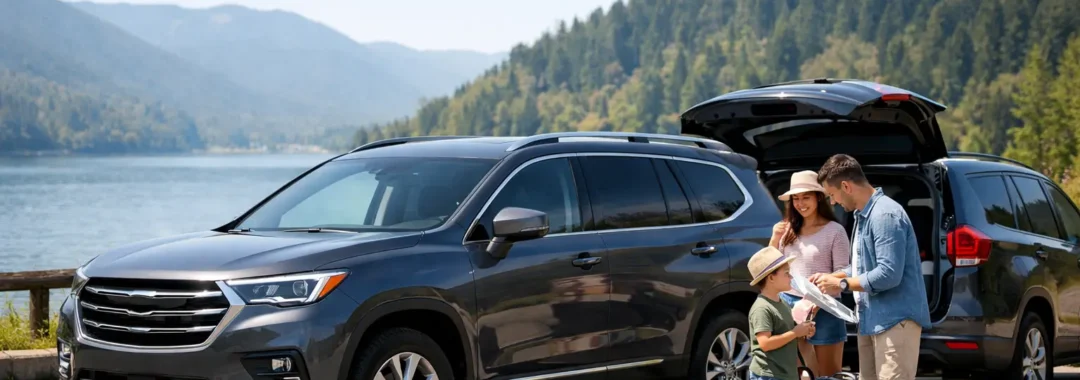
A seven seat SUV for family travel can turn a tight, stressful trip into one where everyone has a proper seat, the bags fit, and the drive starts without a game of boot Tetris. But not every vehicle with seven seats suits every family. The best choice depends on who is travelling, how far you are going and how much gear needs to come along.
For Sydney families, visitors arriving with luggage, or groups planning a coastal break, a larger SUV can be a practical alternative to taking two cars. The key is looking past the seat count and checking how the vehicle works in real life.
What a seven seat SUV really gives your family
The obvious benefit is capacity. Seven seats give you room for parents, children, grandparents or visiting relatives in one vehicle. That can make airport collections, school holiday trips and weekend drives around NSW simpler and often cheaper than organising separate transport.
There is also the comfort factor. A proper seven-seat SUV usually gives passengers more headroom and a higher seating position than squeezing extra people into a smaller car. On a longer drive, that matters. Kids are less likely to be shoulder-to-shoulder, adults have more legroom, and everyone has a clearer view out the windows.
Many seven-seat SUVs also have flexible seating layouts. You might use all three rows for a family of six or seven, then fold part or all of the third row down when travelling with fewer people and more luggage. That flexibility is one reason they work so well for a mix of airport runs, family holidays and everyday errands.
Seven seats does not always mean seven adults plus luggage
This is the detail that catches people out. Most seven-seat SUVs use a 2-3-2 layout. The third row is often best suited to children, teenagers or smaller adults, especially on a longer trip. Adults can use it, but comfort will vary between vehicle models and how far the front and middle seats are moved back.
Boot space also changes dramatically when the third row is in use. With all seven seats up, there may be enough room for a few soft bags, backpacks or a compact pram, but not necessarily seven large suitcases. If your group is arriving at Sydney Airport with full-size luggage, check the practical boot capacity before booking.
A useful rule is to match the layout to the journey. For a short drive from the airport to a hotel or home, adults can manage in the back row and bags may be placed carefully around the available cargo area. For a week away with a pram, beach gear, portable cot and several suitcases, you may need fewer passengers, softer luggage, roof storage where permitted, or a second vehicle.
Start with passengers, then plan the luggage
Before choosing a hire vehicle, write down exactly who is travelling. Include child seats, boosters and the age of each passenger, not just the number of people. A seven-seat SUV may physically have room for seven occupants, but a rear-facing child seat can affect access to the third row and the available space in the middle row.
Then think about what will go in the boot. Hard-shell suitcases take up space quickly. Soft duffel bags are easier to position around a folded seat and can be the better option for a full vehicle. Prams are another common surprise, particularly larger travel systems that do not fold compactly.
For airport travel, it helps to separate essentials from bulk luggage. Keep passports, medication, snacks, chargers and a change of clothes in smaller bags that can stay within reach. Larger cases can go in the rear cargo area, provided they are securely stowed and do not block the driver’s view.
Check child-seat points and third-row access
If you are travelling with young children, do not assume every seating position will work with your preferred restraint. Check the vehicle’s child-seat anchor points, ISOFIX availability where relevant, and the rental provider’s requirements for fitting seats.
Also consider how passengers will reach the third row. In many SUVs, the middle-row seat tilts and slides forward. That is convenient when one side is left clear, but less so if child seats are fitted across the middle row. Families with three or more young children should discuss their seating needs before collection rather than trying to solve it in the car park.
Choose the right SUV for the trip, not the biggest badge
A seven-seat AWD SUV can be a sensible option when your plans include wet roads, unsealed access roads or a drive beyond the city. For most Sydney airport transfers and metropolitan travel, however, the main benefit is usually passenger and luggage capacity rather than all-wheel-drive capability.
Larger vehicles can be more comfortable for long distances, but there are trade-offs. They may use more fuel, cost more to hire than a five-seat car, and take a little more care to park in busy areas such as the CBD, Bondi or shopping-centre car parks. A higher driving position and parking sensors can make the adjustment easier for drivers who do not regularly drive larger vehicles.
If you only need extra seats for one part of the trip, it may still be worthwhile. A family arriving together at the airport can collect a seven-seater, use it for the holiday, then return it when the group separates. Hiring for the days you genuinely need the space can be more cost-effective than paying for a larger vehicle throughout an extended stay.
Keep the rental cost clear from the beginning
The daily rate is only one part of comparing a seven-seat SUV hire. Ask what is included, what excess applies in the event of damage, whether there is a bond or security deposit, and how fuel is handled on return. It is also worth checking kilometre allowances, additional driver costs, child-seat options and out-of-hours collection or drop-off arrangements.
For families watching the budget, booking direct can make it easier to ask practical questions before committing. Low Cost Car Rental offers 7-seat AWD SUV options for customers who need extra room without automatically paying the premium often associated with major airport agencies. The right vehicle is still the one that suits your passenger numbers and luggage, not simply the lowest advertised rate.
If you are collecting near Sydney Airport, allow time to inspect the vehicle, adjust mirrors and seats, and familiarise yourself with the controls before loading everyone in. Take photos of the vehicle condition at collection if that is part of the provider’s process. It is a small step that can make the return straightforward.
Pack and load for a calmer drive
Once you have the right car, how you load it makes a noticeable difference. Heavy items should sit low and as far forward in the cargo area as practical. Loose objects should not be left on seats or in footwells, where they can become hazards under braking.
Keep the third-row passengers comfortable by setting up the car before departure. Make sure their seatbelts are easy to reach, air vents are open, and they have water, entertainment and a light jacket within reach. The rear row can feel warmer than the front, particularly in summer traffic, so test the air conditioning before setting off.
On a longer NSW drive, plan stops around the passengers who need them most. A seven-seat SUV gives you more capacity, but it does not remove the need for breaks, snacks and a stretch. Leaving a little earlier is usually better value than racing to make up time with a tired car full of people.
When a seven-seater is the wrong fit
A seven-seat SUV is not automatically the best answer. If you have seven adults and a week of large luggage, a people mover, two vehicles or a van for the bags may be more realistic. If there are only two adults and one child, a smaller five-seat vehicle may be easier to park and cheaper to run.
It also depends on confidence behind the wheel. Larger SUVs are manageable, but drivers unfamiliar with Sydney traffic, tight underground car parks or left-side driving may prefer a vehicle they can place comfortably on the road. Choosing a slightly smaller car that you can drive with confidence is better than hiring extra capacity you cannot use easily.
The best family trip starts with an honest count of people, seats, bags and kilometres. Choose a vehicle that gives everyone enough room for the journey you are actually taking, then leave a little space for the things family travel always brings with it: extra snacks, unexpected stops and one more bag than planned.
