
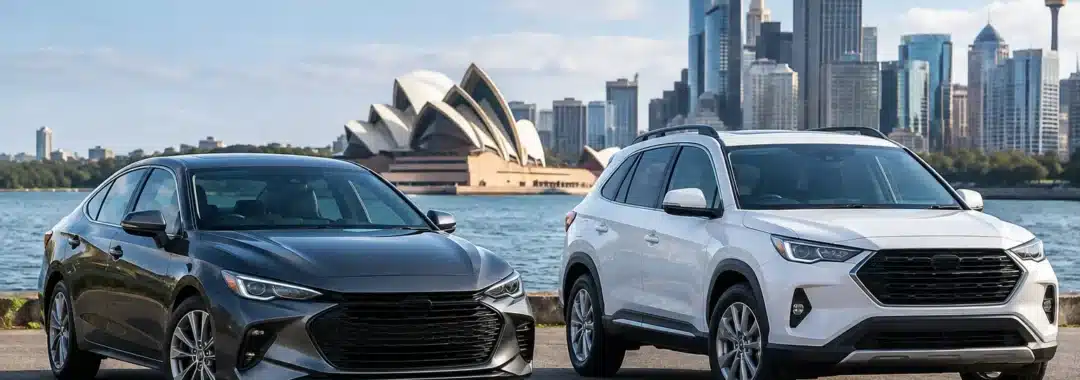
A sedan SUV comparison matters most when you are standing at the rental counter, bags in hand, and realising the cheapest-looking option may not suit the trip ahead. A sedan can be easier to park and lighter on fuel, while an SUV can make family travel, airport luggage and longer drives far more comfortable. The right choice comes down to how many people are travelling, where you are going and what you need to carry.
Sedan SUV comparison: start with the trip, not the badge
It is easy to assume an SUV is always the better hire because it is bigger. That is not necessarily true. If you are travelling solo, as a couple, or with one or two passengers, a sedan often gives you all the space you need at a lower daily cost.
For Sydney CBD driving, a sedan is usually the sensible choice. It is easier to fit into tight parking spaces, generally uses less fuel and feels less cumbersome on busy streets around Alexandria, Redfern or the airport precinct. Modern sedans also have comfortable seating, air conditioning and a practical boot for everyday bags.
An SUV earns its place when the extra room will actually be used. Families with children, groups with several suitcases, travellers carrying prams, or anyone heading away for a few days may appreciate the higher seating position and additional cargo capacity. If your plans include a drive down the coast, a visit with relatives, or collecting a group from Sydney Airport, that extra room can remove a lot of stress.
When a sedan is the better-value rental
A sedan is often the best match for people who want straightforward, affordable transport without paying for unused space. It works particularly well for business travel, airport transfers for one or two people, city appointments and weekend plans where luggage is limited.
The lower ride height makes getting in and out easy for most adults, and the boot is separate from the passenger area. That is useful if you want to keep luggage out of sight while parked. Sedans also tend to feel stable and quiet on motorways, so they are not just city cars. A drive from Sydney to the South Coast or up to the Central Coast can be perfectly comfortable in a sedan.
Fuel costs are another practical factor. The difference depends on the specific vehicle and how far you drive, but a smaller, lighter sedan will commonly use less fuel than a larger SUV. For a multi-day hire with plenty of kilometres, that saving can matter as much as the daily rental rate.
Choose a sedan when your priority is keeping the booking economical, you expect to park in dense areas, and you do not need elevated seating or a large cargo area. Just check the number of large cases you are bringing. A sedan boot can handle several bags, but not every mix of hard suitcases, golf clubs, prams and carry-ons will fit comfortably.
When an SUV is worth the extra spend
An SUV is designed around flexibility. The cabin is usually taller, the rear seating can be more useful for adults, and the cargo area is easier to load when you have bulkier items. That makes it a strong option for families, groups and visitors who do not want to play luggage Tetris before leaving the airport.
The raised driving position is a major reason some renters prefer an SUV. You sit higher, which can make traffic feel easier to read, particularly if you are unfamiliar with Sydney roads. It does not make the vehicle invincible or remove the need for care in traffic, but many drivers find the visibility reassuring.
A larger SUV may also be the right choice for a family holiday or a trip that involves more than regular city driving. Some seven-seat AWD SUVs provide room for larger groups, although third-row space and luggage capacity vary. With all seven seats in use, the remaining cargo space can be much smaller than expected. If every passenger has a large suitcase, confirm the vehicle dimensions before booking.
SUVs are not automatically better for every group of five. A five-seat SUV can be more comfortable than a sedan when passengers are tall or travelling with plenty of bags, but it may cost more to hire, fuel and park. Paying extra is worthwhile when it solves a real space or comfort problem, not simply because an SUV looks more holiday-ready.
Think about parking before choosing an SUV
Sydney parking can change the equation quickly. Inner-city car parks, older apartment blocks and narrow street spaces are easier to manage in a sedan. An SUV can still be practical, but it needs more room to manoeuvre and may feel awkward if you are not used to driving a larger vehicle.
Before booking, think about where the vehicle will spend most of its time. If you are staying near the CBD and catching public transport for much of the day, a sedan may be the more convenient hire. If you are staying in the suburbs, travelling with children and making regular trips with bags or equipment, the SUV may make daily life easier.
Do not overlook height restrictions either. Most standard SUVs fit common parking stations, but some have lower clearance than others. Check the vehicle height if you know you will use a car park with a strict limit.
Luggage, passengers and child seats
The most common rental mistake is counting seats but not counting bags. Five people can fit in a five-seat sedan or SUV, but that does not mean five large suitcases will fit as well. The vehicle may legally seat everyone while still being impractical for an airport collection.
For two adults and two children with holiday luggage, either vehicle type may work, depending on the bags and whether you need child seats or a pram. For four adults with full-size cases, an SUV often provides the safer margin. For six or seven travellers, look at a genuine seven-seat option and ask about usable boot space with the rear seats raised.
Child seats add another consideration. They take up more room than many people expect and can affect how comfortably adults fit beside them. If you are travelling with multiple children, choose based on the full seating layout rather than the advertised maximum number of passengers.
Compare the whole hire cost, not only the daily rate
A cheaper daily rate is helpful, but it is not the complete picture. Compare the expected fuel use, the likelihood of needing a larger vehicle later, your parking costs and the space you will genuinely need. Hiring a small sedan then struggling to fit passengers and luggage is rarely a bargain. On the other hand, hiring a large SUV for a couple with backpacks can add unnecessary cost.
Also review the booking conditions before confirming a vehicle. Check the bond, insurance excess options, kilometre allowance, additional driver rules, pick-up times and return arrangements. These details affect the real cost and convenience of the hire more than a small difference in vehicle category.
For airport arrivals or late flights, collection flexibility can be just as valuable as vehicle size. Low Cost Car Rental offers budget-focused options with personalised support, so it is worth discussing your passenger numbers, luggage and timing before you lock in a car that is too small or larger than needed.
A simple way to make the call
Choose a sedan if you are mainly driving around Sydney, travelling with light-to-moderate luggage, want easier parking and are focused on the lowest practical cost. It is a capable choice for couples, solo travellers and small groups with sensible packing.
Choose an SUV if you need more cabin room, have bulky luggage, are travelling with children, prefer higher seating, or expect to cover longer distances with several passengers. Consider a seven-seat SUV only when you need the extra seats, and always account for how much boot space remains.
If the decision is still close, imagine the first ten minutes after collection: everyone gets in, every bag goes in without forcing a seat down, and the driver feels comfortable pulling into traffic. The vehicle that handles that moment easily is usually the right rental.
