
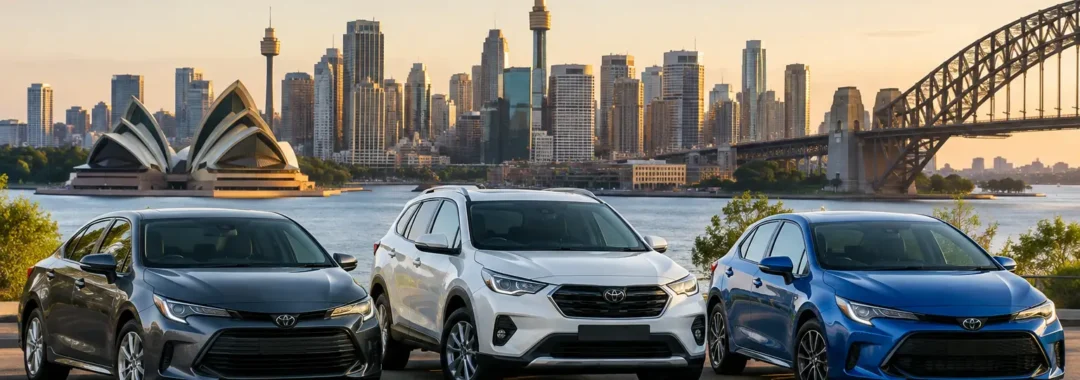
A Sydney commute can mean a slow crawl along Parramatta Road, a packed run through the Eastern Distributor, or a quick trip between the Shire and the CBD. That is why the best cars for Sydney commuters are not necessarily the biggest, fastest or most expensive. They are the cars that make daily travel easier to afford, easier to park and less stressful when traffic does what Sydney traffic does.
For most drivers, a compact car with sensible fuel use is the sweet spot. But your best option changes if you carry work gear, do the school run, travel to the airport regularly or need a vehicle only for a few weeks. Here is how to choose with the real cost of commuting in mind.
What Sydney commuters need from a car
Sydney rewards cars that are easy to live with. Tight parking stations, narrow inner-city streets and busy shopping centre car parks make a small turning circle and good visibility more valuable than many buyers expect. A car that fits confidently into a standard space can save time every single day.
Fuel economy matters too, especially if your route includes long stretches of stop-start traffic. Hybrids are particularly useful around the CBD, Alexandria, Mascot and other busy areas where the engine would otherwise spend plenty of time idling. For longer motorway commutes from Caringbah, Sutherland or the outer suburbs, a fuel-efficient petrol car can still be a practical lower-cost choice.
The right car also needs enough comfort for your routine. That may mean supportive seats and effective air conditioning for an hour behind the wheel, or it may mean a generous boot for groceries, prams, tools or luggage. There is no one perfect commuter car. The sensible choice is the one that matches how you actually travel most days.
Best cars for Sydney commuters by routine
Compact hatchbacks for city driving and parking
A compact hatchback is often the most sensible all-round choice for one or two people commuting into Sydney. Models in the Toyota Corolla, Mazda 3, Hyundai i30 and Kia Cerato class offer enough cabin space for everyday use without feeling oversized in crowded streets.
These cars are generally easy to park, economical to run and comfortable enough for regular motorway trips. A hatch also gives you more flexibility than a small sedan when you need to load shopping, a folded pram or a couple of overnight bags into the boot.
A hybrid hatchback is worth considering if much of your driving happens in traffic. The upfront price can be higher, but reduced fuel use can add up over frequent short trips. The trade-off is availability and purchase cost, particularly for popular hybrid models.
Small SUVs for drivers who need a little more space
Small SUVs suit commuters who like a higher driving position or need room for children, weekend gear and occasional airport runs. Options such as the Toyota Corolla Cross, Mazda CX-30, Hyundai Kona and Kia Seltos sit between a hatchback and a larger family SUV.
They can be a good fit for drivers travelling between suburbs, particularly where roads are less congested and a slightly larger vehicle feels more comfortable. Many have rear seats that are more useful for adults than those in a compact hatch, plus a better-sized boot.
The compromise is fuel use and parking. Even a small SUV is wider and taller than a hatchback, which can make tight CBD car parks less relaxing. Choose one with parking sensors or a reversing camera, and do not pay for all-wheel drive unless your regular trips genuinely call for it.
Hybrid sedans for longer motorway commutes
If your journey involves regular motorway kilometres, a hybrid sedan can be a very comfortable option. A Toyota Camry Hybrid, for example, is known for a roomy cabin, a generous boot and low fuel use for its size. It suits commuters who drive from the suburbs to the city, visit clients during the day or often have passengers in the back.
Sedans are less convenient than hatchbacks when loading tall or bulky items, but they tend to feel settled and quiet at motorway speeds. They also offer a more comfortable choice for people spending substantial time in the driver’s seat.
This category makes most sense when you need the extra room. For a solo commute that ends in a tight parking garage, a smaller hybrid may deliver nearly all the fuel-saving benefit with less hassle.
Medium SUVs for families and shared commutes
A medium SUV such as a Toyota RAV4, Mazda CX-5 or Hyundai Tucson is a practical commuter vehicle when it also has to serve as the family car. There is room for child seats, school bags, sports equipment and weekend errands, and the higher seating position appeals to many drivers.
For a family sharing one vehicle, the extra versatility can justify the larger running costs. However, it is worth being honest about how often every seat and every litre of boot space gets used. If most weekday trips involve one person travelling to work, a medium SUV may be more car than you need.
Seven-seat SUVs are helpful for larger families, but the third row is usually best reserved for children or occasional use. They cost more to fuel and can be harder to manage in older city car parks, so they work best when capacity is a regular requirement rather than a once-a-year need.
Electric cars for commuters with dependable charging
An electric vehicle can be a strong commuter choice when you have reliable charging at home or at work. Daily Sydney driving is usually well within the range of modern EVs, and quiet city running is a genuine advantage in heavy traffic.
The deciding factor is charging access, not just advertised range. Apartment residents, renters without a dedicated bay and drivers who rely entirely on public chargers should check their realistic charging routine before committing. Public charging can work, but it requires more planning than plugging in at home overnight.
For drivers with off-street charging, an EV can make a lot of sense. For everyone else, a hybrid remains the easier low-fuel alternative with fewer practical compromises.
Look beyond the purchase price
The cheapest car to buy is not always the cheapest car to commute in. Before choosing, consider fuel or charging costs, insurance, servicing, registration, tolls and parking. A larger vehicle may be affordable at purchase but cost more every week in fuel and city parking.
It is also worth thinking about reliability and downtime. If your car is essential for getting to work, a well-maintained, popular model can be a safer choice than a bargain vehicle with an uncertain service history. Common models are generally easier to service and source parts for, which can matter when life is already busy.
For a short-term need, hiring may be better value than buying or keeping a second car. A compact five-seat hatch or sedan is usually ideal for everyday commuting and airport travel, while a larger SUV can make sense for a family visit or holiday. If you are moving house or transporting equipment, a van or ute is far more practical than trying to make a passenger car do a job it was not built for.
Low Cost Car Rental offers a range of vehicle sizes for Sydney drivers who need that flexibility without taking on long-term ownership costs. When comparing hire options, check the bond, kilometre allowance, collection times and any after-hours return arrangements before you book. Clear terms matter just as much as the daily rate.
A quick way to make the right call
Start with your most common journey, not your occasional one. If you mostly travel alone into the city, choose a compact hatchback or hybrid that is easy to park. If you regularly carry children or luggage, look at a small SUV or sedan with a useful boot. If you genuinely need more seats or capacity every week, step up to a medium or seven-seat SUV.
Then test the practical details. Can you park it at home? Will it fit your workplace car park? Is there a charger where you need one? Can you comfortably load what you carry? A five-minute check of these everyday realities is more valuable than a long list of optional extras.
The best commute car is the one that takes the pressure off your weekday routine, leaves room in the budget for everything else, and gets you where you need to go without turning the trip into the hardest part of the day.
