
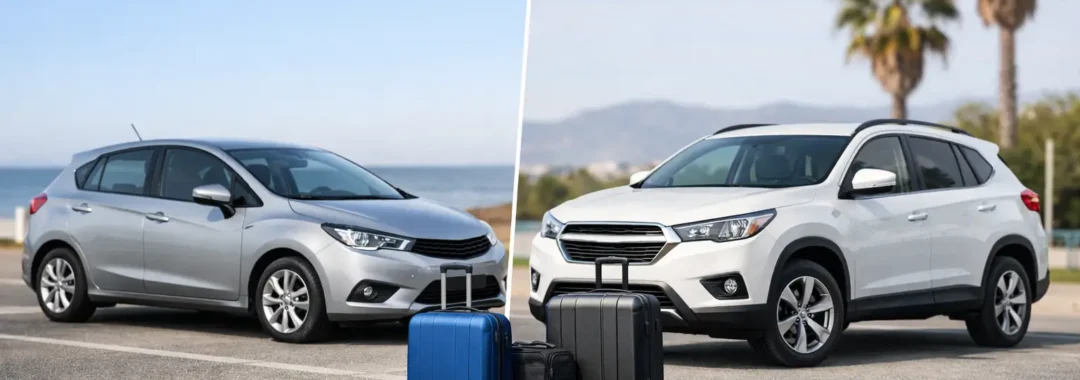
Landing at Sydney Airport with two bags and a weekend plan is very different from loading five people, a pram and beach gear for a drive to Cronulla. That is why the hatchback versus SUV rental choice is less about picking the biggest vehicle you can afford and more about paying for the space and capability you will genuinely use.
A smaller car can keep your hire cost and fuel spend down while making city parking far less stressful. An SUV can make a family trip, a longer motorway drive or a wet-weather getaway much more comfortable. The right answer depends on who is travelling, where you are going and how much luggage is coming along.
Hatchback versus SUV rental: start with the trip
Before comparing daily rates, picture the busiest moment of your hire. Is it finding a park in the Sydney CBD? Collecting relatives from the airport? Driving down to the South Coast with children in the back? Carrying suitcases from an international flight? That moment usually tells you which category will be easier to live with.
A 5-seat hatchback is a sensible choice for solo travellers, couples and small groups travelling light. It suits everyday errands, work trips, short city stays and airport runs with normal luggage. Hatchbacks are compact without feeling cramped for one or two adults, and their smaller footprint is a real advantage in tight car parks, narrow streets and busy shopping centres.
An SUV earns its place when passengers and cargo both matter. A 7-seat AWD SUV can suit larger families, groups visiting Sydney, or anyone who needs room for multiple bags, child seats, sports equipment or a combination of all four. Extra seating is useful, but remember that using every seat can reduce the available boot space. If seven adults all bring large suitcases, one vehicle may still not be enough.
The real price difference is more than the daily rate
A hatchback often has the lower rental rate, uses less fuel and may be easier to manoeuvre into a cheaper or tighter parking space. For a few days of city driving, those savings can add up. If your itinerary is mostly Alexandria, Mascot, the CBD and nearby suburbs, a hatchback is often the practical value choice.
SUVs usually cost more to hire and can use more fuel, particularly around town. That does not automatically make them poor value. Paying a little more can be worthwhile if it means everyone fits comfortably, luggage stays inside the vehicle rather than on laps, and you avoid arranging a second car or several rideshares.
When comparing quotes, look beyond the headline price. Check what is included, the bond requirement, insurance excess options, kilometre conditions, additional driver costs and after-hours collection or return arrangements. A cheap-looking booking can lose its appeal if the terms do not match your plans. Clear pricing and a realistic total cost matter more than a rate that only looks good at first glance.
Fuel use and driving distance
For short local trips, the fuel difference between a hatchback and SUV may be modest. It becomes more noticeable when you are covering longer distances, such as a week of sightseeing, regular motorway travel or a drive outside Sydney. A hatchback will generally be the more economical option at the bowser.
That said, do not choose a small vehicle solely to save fuel if it means overpacking the cabin or squeezing passengers into an uncomfortable trip. A vehicle that fits the group properly can be better value than a cheaper option that creates stress every time you open the boot.
Space is about more than the number of seats
The word “5-seat” can be misleading if you are imagining five adults travelling in comfort with full-size cases. Most hatchbacks can carry five people, but they work best with fewer passengers when luggage is involved. For two adults with several bags, a hatchback is usually a good fit. For four adults with airport luggage, it is worth checking the boot capacity and packing expectations before booking.
SUVs give you a higher seating position, more shoulder room and generally more versatile storage. They can be particularly helpful for families using child seats, as fitting and reaching the seats is often easier than in a lower car. For older passengers, the higher entry point may also feel more comfortable.
A 7-seat SUV is not simply a large boot on wheels. With the third row folded down, you will normally have more cargo flexibility. With the third row upright, the space behind it is often best for smaller bags. Plan around the configuration you will use most, not the maximum number printed in the vehicle description.
Child seats, prams and travel gear
Families should make room calculations early. A pram, portable cot, nappy bag and a couple of suitcases can fill a hatchback quickly. An SUV gives you more breathing room, especially when children are travelling with grandparents or friends.
If you need child seats, confirm the seating layout and attachment requirements when you book. Also consider whether you will need to access the third row regularly. A vehicle may have seven seats, but loading children into the back row every day can be less convenient than choosing a larger vehicle with fewer passengers.
Sydney driving: where each vehicle makes sense
A hatchback feels at home in inner Sydney. It is easier to thread through traffic, fit into many parking bays and handle the stop-start rhythm of city driving. If you expect to visit restaurants, attractions, meetings or shopping areas where parking is tight, compact dimensions can save time and frustration.
An SUV is often more appealing for longer routes, family holidays and trips where road conditions may change. The higher driving position gives many drivers a clearer view of traffic, while the added cabin space makes extended drives more pleasant. AWD can offer extra confidence in wet conditions or on suitable regional roads, but it does not remove the need to drive to the conditions.
Do not assume an SUV is difficult to drive just because it is larger. Most modern SUVs are straightforward, but they need more awareness in multi-storey car parks, narrow driveways and low-clearance areas. Check clearance signs before entering, particularly around airport and CBD parking facilities.
Choose comfort when the itinerary demands it
A rental car should support your trip, not become another thing to manage. If you are travelling alone for a two-day work visit, a hatchback is likely all you need. It is affordable, easy to park and comfortable for normal city use.
If you are collecting family from Sydney Domestic or International Airport, heading to the Sutherland Shire with luggage, or planning full days on the road, an SUV may justify the extra spend. More legroom, better storage and an easier ride for passengers can make a noticeable difference by day three or four.
Drivers also have preferences worth respecting. Some people feel more confident in a compact car; others prefer the visibility and solid road presence of an SUV. If you have not driven a larger vehicle recently, choose the option that you will feel comfortable parking and manoeuvring.
A simple way to make the call
Choose a hatchback when your group is small, your bags are manageable, your plans are mostly urban and keeping costs low is the priority. It is the smart option when you want straightforward transport without paying for unused seats and space.
Choose an SUV when the trip includes more people, more luggage, child seats, longer drives or a need for extra comfort. It is also the better choice when your plans could change and you would rather have room in reserve than spend the trip trying to make everything fit.
Low Cost Car Rental offers both practical 5-seat vehicles and larger 7-seat AWD SUV options, so you can book around the trip rather than settling for whatever is left at an airport counter. If you are unsure, count the passengers, count the bags and think about the car park you will face first. The best rental is the one that gets everyone there comfortably without stretching your budget.
