
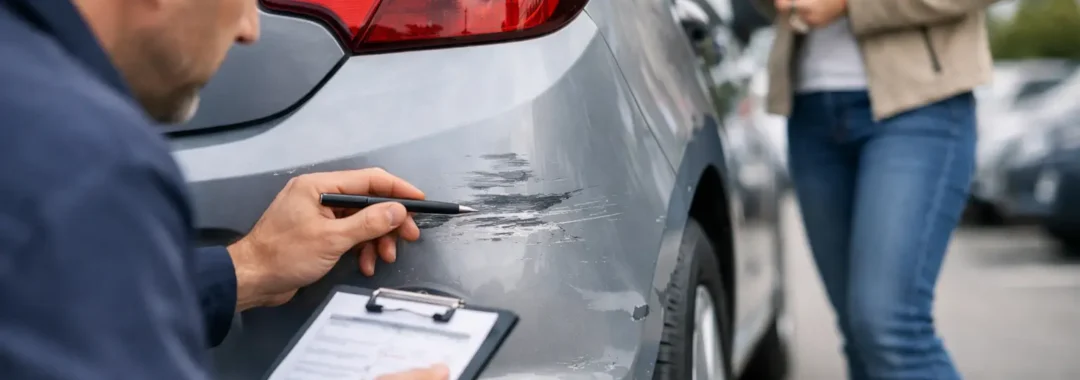
You do not want to discover a scratch on the bumper after you have returned the keys and the hire company says it was not there before. Knowing how to inspect hire car damage properly takes five extra minutes at pick-up, and it can save you money, time and a frustrating back-and-forth later.
The good news is you do not need to be a mechanic. You just need to be systematic, calm and a bit fussy. A quick glance while juggling bags in the car park is not enough, especially if you are collecting at an airport, arriving late, or trying to get the family moving. The smartest approach is to check the vehicle the same way every time, document what you see, and make sure any existing marks are acknowledged before you leave.
Why inspecting damage matters
Most rental issues do not come from major accidents. They come from small things that are easy to miss – a stone chip in the windscreen, gutter rash on a wheel, a scrape under the front bumper, or a stain on the seat. If it is not noted at handover, there is room for confusion later.
This matters even more with budget-focused car hire, because most customers are trying to keep costs under control. If you are hiring for an airport run, a weekend away, a move with a van, or a short-term work job in Sydney, the last thing you want is an avoidable charge because you were rushed. A proper inspection protects both you and the rental provider. It keeps expectations clear from the start.
How to inspect hire car damage before driving away
Start before you load your bags or adjust the seat. It is much easier to inspect a car when you are not distracted. If the lighting is poor, use your mobile torch. If the car is wet from rain or a wash, take extra care because water can hide scratches and dents.
Walk around the vehicle slowly and look at it from more than one angle. Damage often shows up only when the light hits the panel a certain way. Do not just focus on big dents. Check for smaller marks too, because those are the ones people commonly miss.
Check the outside panel by panel
Begin at the front and work your way around in one direction. Look at the front bumper, bonnet, headlights and grille. Then move down each side, checking the doors, mirrors, handles and side skirts. Finish at the rear bumper, tail-lights and boot area. A consistent routine helps you avoid skipping a section.
Pay attention to common damage spots. Bumpers collect scrapes. Door edges pick up chips. Side mirrors can have scuffs. The lower panels are easy to overlook, especially on SUVs, vans and utes. If you are hiring a larger vehicle than you normally drive, those lower areas matter even more because previous drivers may have clipped kerbs or loading bays.
Do not forget the wheels and tyres
Wheels are one of the most overlooked parts of a rental inspection. Check each alloy or wheel cover for scratches, cracks or kerb rash. Then look at the tyres. You are not expected to perform a full safety inspection, but you should notice if a tyre looks obviously worn, damaged or low.
This is not just about liability. It is also about your trip. If something looks off when you leave the depot, it is much easier to raise it immediately than from the side of the road later.
Look at the windscreen and windows closely
Small stone chips can be hard to spot unless you take your time. Stand at an angle and check the windscreen for stars, cracks or chips, especially near the edges. Also check side windows and the rear window. If there is existing damage, make sure it is recorded.
Windscreen issues are a classic source of disputes because tiny chips can spread during a trip. If it was there at pick-up and not documented, proving that later can be awkward.
Inspect the roof if practical
If you are in a hatchback or sedan, the roof is usually easy enough to view. On taller vehicles, you may not get a perfect look, and that is fine. Just check what you reasonably can. Tree branch marks, dents and scraped roof edges can happen, especially on vans entering car parks with low clearance.
You do not need to climb on anything. If the roof is hard to see, use your mobile camera to take a quick elevated photo where possible.
Check the interior as well
People tend to focus on body damage, but interior condition matters too. Open the doors and look at the seats, dashboard, door trims and carpets. Check for tears, stains, burns, broken controls or missing items.
If you are hiring a family vehicle or moving van, pay extra attention to the cargo area and rear seats. Scuffed trim, cracked plastic or torn fabric should be noted before departure. The same goes for odours that suggest the vehicle needs cleaning or attention.
Also make sure the obvious essentials are there. That includes the spare wheel or repair kit if supplied, parcel shelf if relevant, and any accessories promised at booking. It is much easier to sort that out on the spot than once you are already on the road.
Take photos and video every time
The simplest way to protect yourself is to document the condition thoroughly. Take clear photos of all four corners, each side, the front, the rear, the wheels and the interior. Then take close-ups of any existing marks. A short walk-around video is useful as well.
Make sure your phone records the time and date automatically. You do not need professional-quality images. You just need clear, honest evidence of the vehicle’s condition when you collected it.
This step matters even if the rental provider already has its own condition report. Good operators will document the car too, but having your own record gives you peace of mind. It keeps things straightforward if a question comes up later.
Match what you see to the condition report
Before leaving, compare the car with the check-out report or damage sheet. If a scratch, dent or chip is missing from the paperwork, ask for it to be added. Do not assume a small mark is too minor to mention. If you noticed it, record it.
This is where a good rental experience stands out. A transparent provider should have no issue confirming existing damage and updating the record. If anything is unclear, ask. It is better to have a two-minute conversation at the counter or kerbside than an argument after return.
If you collect after hours, be even more careful
After-hours pick-up is convenient, especially for airport arrivals or late returns, but it leaves less room for immediate face-to-face clarification. In that situation, your own documentation becomes even more important.
Take more photos than you think you need. If there is a process for reporting existing marks by mobile, email or app before departure, use it straight away. Keep your message simple and factual. Note the location of the damage, attach the photos, and send it before you drive off if possible.
What counts as damage and what does not?
This can vary between operators, which is why reading the rental terms still matters. Some wear and tear may be treated differently from chargeable damage. A tiny stone chip on an older vehicle is not the same as a fresh bumper scrape. The age and class of the car can affect how condition is assessed.
That said, do not try to guess what will or will not matter. If you can see it, report it. The goal is not to debate standards in the car park. The goal is to create a clear starting point.
A few mistakes renters make
The most common mistake is being in a rush. The second is assuming the inspection has already been done perfectly by someone else. The third is only checking the obvious panels and missing the windscreen, wheels or interior.
Another one is waiting until drop-off to mention a pre-existing issue. By then, memories are less reliable and the conversation gets harder. If you notice something five minutes after leaving, pull over safely and contact the rental provider straight away.
A practical approach that keeps things simple
If you want the easiest version of how to inspect hire car damage, use this routine every time: walk around slowly, check low and high, inspect the glass and wheels, look inside, take photos, and confirm the report matches what you can see. It is not complicated. It just needs to be done properly.
At Low Cost Car Rental, this kind of straightforward check is exactly how customers avoid surprises and start their trip with confidence. Cheap car hire should still come with clear processes and responsive support.
A careful inspection is not about mistrust. It is about starting with a clean record, so you can get on with the drive instead of worrying about what might show up later.
